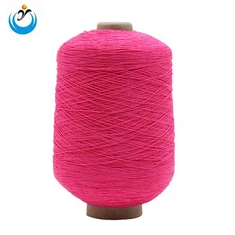

Rubber Covering Yarn
Description
Technical Parameters
Superb Quality And High Grade rubber covered yarn
Chemical Resistance:Rubber-covered yarns exhibit excellent chemical resistance, which is a critical feature in various industrial applications. The rubber coating provides a protective barrier that shields the yarn from chemical substances, preventing degradation and maintaining performance integrity in harsh environments.
In industries such as manufacturing, where machinery and equipment are exposed to chemicals like oils, solvents, and acids, rubber-covered yarns play a crucial role. They resist chemical attack, thereby prolonging the lifespan of components such as conveyor belts, industrial ropes, and other equipment where durability is paramount. This resistance reduces maintenance costs and downtime associated with frequent replacements.
Moreover, in sectors requiring stringent safety standards, such as healthcare and laboratories, rubber-covered yarns are employed in protective clothing, gloves, and other gear. These garments provide a reliable barrier against hazardous chemicals, ensuring the safety of workers and minimizing exposure risks.
The ability of rubber-covered yarns to withstand chemical exposure also extends their usefulness in outdoor and marine applications. They resist corrosion from saltwater and chemicals present in outdoor environments, making them suitable for use in ropes, nets, and other marine equipment.
Furthermore, in electronics and electrical engineering, where insulation and protection against chemical exposure are critical, rubber-covered yarns are used in cables and wires. They enhance the durability and safety of electrical components by preventing chemical damage and maintaining electrical integrity.
Electrical insulation:Due to its robust insulating properties conferred by the rubber layer, rubber-covered yarn finds extensive application in electronics and electrical engineering where reliable electrical insulation is paramount. This specialized yarn plays a critical role in safeguarding wires and cables from environmental factors and external influences that could compromise their electrical integrity.
In electronics, where precision and reliability are crucial, rubber-covered yarn ensures that wires and cables maintain consistent electrical performance. The rubber coating acts as a barrier, preventing electrical current leakage and protecting against potential short circuits. This is particularly important in devices and circuits where even minor disruptions can lead to operational failures or safety hazards.
Moreover, in electrical engineering applications, such as power distribution systems and industrial machinery, rubber-covered yarn is utilized to insulate conductors and cables. It effectively withstands the rigors of high voltage and fluctuating temperatures, providing a stable and secure electrical pathway.
The durability of rubber-covered yarn enhances its longevity in demanding environments, including those with exposure to moisture, chemicals, and mechanical stress. This resilience ensures prolonged service life and reduces the need for frequent maintenance or replacement of electrical components.
Electrical insulation:Rubber-covered yarn is highly valued in electronics and electrical engineering for its exceptional insulating properties, crucial for safeguarding wires and cables in various applications. The rubber layer serves as a protective barrier that effectively isolates and insulates conductive elements from external environmental factors and potential hazards.
In electronics, where precision and reliability are paramount, rubber-covered yarn ensures that electrical components remain securely insulated. This insulation prevents electrical leakage and minimizes the risk of short circuits, thereby maintaining the integrity and safety of circuits and devices. Whether in consumer electronics, industrial machinery, or telecommunications infrastructure, the use of rubber-covered yarn contributes to the longevity and performance stability of electrical systems.
Moreover, in electrical engineering applications, such as power distribution and control systems, rubber-covered yarn plays a crucial role in enhancing operational safety. It withstands the rigors of varying temperatures, moisture, and mechanical stresses, which are common in demanding industrial environments. This durability ensures consistent electrical performance and reduces maintenance needs, thereby optimizing operational efficiency.
The flexibility of rubber-covered yarn allows for ease of handling during installation and maintenance procedures. Its ability to conform to different shapes and configurations facilitates seamless integration into complex electrical setups without compromising insulation quality.
Introduction to the production process of this yarn

Yarn Selection
In the production of rubber covered yarn, the first step is to select the appropriate yarn core. The choice of yarn directly affects the final performance characteristics of the product, such as strength, softness and applicable environment. There are usually a variety of natural or synthetic fibers to choose from, such as cotton, polyester, nylon, etc., and the type and structure of the fiber are determined according to the product requirements. The balance of softness and strength is critical for the subsequent application of the cover layer, as this affects the bonding of the cover layer to the yarn and the overall durability.
Cover Application
Once the appropriate yarn core is determined, the next key step is the application of the cover layer. The cover layer is usually composed of rubber or synthetic rubber, such as neoprene, nitrile rubber or silicone rubber. The method of applying the cover layer can include coating, dipping or spraying techniques, which ensure that the rubber can be evenly coated on the surface of the yarn. The key to this step is to ensure that the rubber is fully bonded to the yarn to form a strong and uniform cover layer, thereby providing the required elasticity, wear resistance and non-slip properties.


Curing treatment
After the covering layer is applied, the next stage is the curing treatment. Curing is to completely cure the rubber layer by heating or chemical curing agents to ensure that it has the required elasticity, wear resistance and weather resistance. The temperature and time of curing are key parameters and must be precisely controlled to ensure that the covering layer can achieve the physical and chemical properties required by the design. When heating and curing, high-temperature ovens or hot air circulation systems are usually used to ensure that the covering layer is uniformly cured at high temperatures and does not affect the performance of the yarn core.
In what fields can rubber covering yarn be used?

Industrial Applications:
Drive and conveyor belts: used to enhance the wear resistance and tensile strength of belts and extend their service life, especially in transmission systems and conveying equipment commonly used in industrial production.
Industrial ropes and cords: used to manufacture wear-resistant and durable industrial ropes such as lifting ropes, slings and towing lines, which are widely used in excavation, construction and aviation.
Protective equipment: including protective gloves, protective gear and other personal protective equipment to ensure safety and durability in hazardous working environments.
Outdoor and sports goods:
In the realm of outdoor and sports goods, the application of rubber-coated yarn is indispensable. For outdoor equipment like tents, backpacks, climbing ropes, and lashing ropes, durability against wear, waterproof capabilities, and resilience to varying weather conditions are essential features. These qualities ensure reliable performance and longevity in rugged outdoor environments. Similarly, in sports equipment such as yoga mats, sports shoes, and fitness equipment handles, rubber-coated yarn enhances anti-slip properties and wear resistance, thereby improving safety and user experience during vigorous physical activities.

Maybe you have the following questions
1. What are the advantages of this yarn compared to ordinary yarn?
This yarn has many significant advantages over ordinary yarn. First of all, this yarn performs well in abrasion resistance, and its surface layer can effectively resist friction and wear, extending the service life of the product. This makes this yarn very suitable for use in high-load and high-friction environments, such as industrial conveyor belts, outdoor ropes, and handles of sports equipment. In addition, the rubber coating provides good anti-slip properties, enhances the grip of fabrics or ropes, and reduces the risk of slipping, especially in sports equipment and protective equipment, greatly improving the safety and comfort of use. The waterproof performance of this yarn is also a major advantage. It can effectively prevent moisture penetration and keep the inside dry, making it suitable for making outdoor equipment such as tents, backpacks and waterproof gloves. Compared with ordinary yarn, this yarn also has better UV resistance, which can effectively prevent UV damage and extend the service life of the product. It is suitable for outdoor applications exposed to the sun for a long time.
2. Is this yarn suitable for making outdoor equipment such as tents and backpacks?
Yes, this yarn is very suitable for making outdoor equipment such as tents and backpacks. Its superior wear resistance and waterproof properties make it an ideal material for outdoor equipment. This yarn can effectively resist wind and rain erosion, prevent moisture penetration, keep the interior dry, and increase the durability and comfort of the equipment. In the production of tents, this yarn is often used to make the frame and ropes of tents. Its wear resistance, tensile resistance and waterproof properties ensure the stability and safety of tents in various adverse weather conditions. In the production of backpacks, this yarn is used to make backpack straps and accessories, providing better wear resistance and anti-slip properties, reducing damage caused by friction and pulling. In addition, the anti-ultraviolet performance of this yarn also ensures that backpacks and tents are not easy to fade and age under long-term sunlight, extending the service life.
3. What are the advantages of using this yarn in sports equipment?
In sports equipment, the application of this yarn has many advantages. First of all, this yarn provides excellent anti-slip properties, increases the grip of sports equipment, reduces the risk of sliding, and ensures safety during exercise. For example, this yarn is often used in the production of yoga mats, enhancing the anti-slip properties of the mats, providing a more stable sports surface, and reducing accidental slips during exercise. Secondly, the wear resistance of this yarn allows sports equipment to remain in good condition after long-term use, reducing the frequency of replacement and lowering maintenance costs. On the handles and grips of fitness equipment, this yarn can provide a more comfortable grip, reduce hand fatigue, and improve exercise effects and safety. In addition, the waterproof performance of this yarn also allows sports equipment to maintain good performance in a humid environment, suitable for the production of various outdoor and water sports equipment.
4. Is this yarn suitable for products in the medical and health fields?
Yes, this yarn is widely used in the medical and health fields. Its unique properties make it an ideal material for many medical and rehabilitation products. For example, when making elastic bandages and compression stockings, this yarn can provide appropriate elasticity and support to help patients restore blood circulation and reduce swelling. In rehabilitation equipment and support straps, the tensile strength and wear resistance of this yarn ensure the long-term use and stability of the product, providing better rehabilitation effects. In addition, the anti-slip performance of this yarn is also very important, which can provide better safety and comfort in the fixing straps and protective gear of medical equipment. The application of this yarn in the medical field not only improves the functionality and durability of the product, but also improves the patient's experience and safety.
5. How durable is this yarn? How long can it last in harsh environments?
The durability of this yarn is excellent, especially in harsh environments, and it can maintain good performance for a long time. Its abrasion resistance and tear resistance enable this yarn to maintain stable performance in high-load and high-friction environments. In extreme climatic conditions, such as high temperature, low temperature and strong ultraviolet rays, this yarn also has excellent weather resistance, is not easy to age and fade, and ensures the long-term service life of the product. For example, in climbing ropes and outdoor tents in alpine environments, the anti-ultraviolet and waterproof properties of this yarn can effectively resist wind, sun and rain erosion, and maintain the stability and safety of the equipment. The durability of this yarn in these harsh environments is due to its special coating technology and high-quality material selection, which ensures the reliability and safety of the product after long-term use.
6. Is the production process of this yarn complicated? How to ensure its quality?
The production process of this yarn is relatively complicated, involving multiple processes and high standards of quality control. During the production process, first of all, it is necessary to select high-quality yarn as the base material, and then the rubber material is evenly coated on the yarn through the coating process. During the coating process, the control of temperature, time and coating thickness is very critical, which directly affects the performance and quality of the final product. In order to ensure the quality of this yarn, manufacturers usually use advanced coating technology and equipment, such as electrostatic spraying and dipping coating technology, to ensure a good combination between the rubber layer and the yarn to avoid shedding and cracking. At the same time, strict quality inspection is also an indispensable link, including tensile strength test, wear test and waterproof test, etc., to ensure that each batch of this yarn meets industry standards and customer requirements. In addition, environmental control is required during the production process to avoid pollution and adverse reactions and ensure the stability and safety of the product.
7. What is the cost of this yarn? How to balance between price and performance?
The cost of this yarn is relatively high, mainly due to its complex production process and high-quality material requirements. However, in the long run, the high durability and superior performance of this yarn bring users a higher cost-effectiveness. In terms of the trade-off between price and performance, users need to choose the right product according to specific application requirements. For example, for outdoor equipment and industrial products that require long-term use and high safety, the high cost of this yarn is worth the investment because it can significantly improve product reliability and service life, reduce the frequency of repairs and replacements, and reduce long-term maintenance costs. In some cost-sensitive applications, the balance between cost and performance can be optimized by selecting this yarn in different thicknesses and coating types. In short, while this yarn provides excellent performance, reasonable selection and use can achieve the best cost-effectiveness while ensuring product quality.
Hot Tags: rubber covering yarn, China rubber covering yarn manufacturers, suppliers, factory
Previous
Rubber Covered YarnNext
Yarn Rubber ThreadSend Inquiry