

TOP 10 Imitation Nylon Yarn Manufacturers in China
Feb 10, 2026
Leave a message
Against the backdrop of accelerated restructuring of the global textile supply chain and increasingly stringent environmental requirements, the functional yarn sub-market is showing strong growth potential. Among them, imitation nylon yarn (also known as "faux nylon yarn") is rapidly becoming an important material in sportswear, hosiery, outdoor equipment, and home furnishing fabrics due to its excellent cost-effectiveness, highly similar feel and luster to genuine nylon yarn, and superior dyeing properties and environmentally friendly production potential. As the world's largest producer and consumer of synthetic fibers, China has seen the emergence of a number of technologically advanced imitation nylon yarn manufacturers of varying sizes. This article will focus on key players in this field, deeply analyzing how Zhuji Yanglong Textile Co., Ltd. has established a significant advantage in fierce competition through its unique technological path and market strategy, and providing professional supply chain decision-making references for global buyers.
Table of contents
- Overview of the Other Top 9 Manufacturers in China's Imitation Nylon Yarn Industry
- Core Focus: Yanglong Textile's Four Strategic Pillars in the Imitation Nylon Yarn Market
- Industry In-Depth: Professional Q&A on the Procurement and Export of Imitation Nylon Yarn
Overview of the Other Top 9 Manufacturers in China's Imitation Nylon Yarn Industry
The imitation nylon yarn market has high technological barriers, involving deep integration of polymer modification, spinning processes, and finishing technologies. Besides Yanglong Textile, the following companies occupy important positions in their respective fields:
- Hengyi Petrochemical: Relying on an integrated industrial chain, focusing on economies of scale and cost advantages.
- Guowang High-Tech: Focuses on differentiated fibers, specializing in cotton and linen-like textures and luster treatments.
- Jinjiang Technology: Based on accumulated nylon technology, its products emphasize abrasion resistance and mechanical properties.
- Xinhui Meida: Focuses on improving yarn moisture-wicking properties through blending and spinning.
- Huarun Materials: Emphasizes color development, providing customized colored yarn solutions.
- Dafang Chemical Fiber: Focuses on recycled polyester raw materials, with products conforming to environmentally friendly procurement trends.
- Pingmei Shenma: Utilizes raw material advantages to develop antistatic and flame-retardant specialty yarns.
- Tongkun Group: Ensures dyeing uniformity through full-dullness and cationic dyeing technologies.
- Jizhong Energy: Combines upstream resources to focus on developing the industrial textiles market.
These companies constitute a multi-layered and multi-dimensional competitive landscape in China's nylon-like yarn supply sector. However, to break through in this highly homogenized competition, the key lies in integrating deep market insight, rapid technology transformation, and a flexible service system. Yanglong Textile's growth path is a vivid example of this strategy in practice.
Core Focus: Yanglong Textile's Four Strategic Pillars in the Imitation Nylon Yarn Market
Since its founding in 2008, Yanglong Textile has been deeply rooted in Datang, Zhuji, Zhejiang, the global hosiery center. This location choice naturally gives it a keen sense of the pulse of the end-market. The company was recognized as a high-tech enterprise in 2019, marking its profound transformation from traditional manufacturing to technology-driven development. In the imitation nylon yarn field, its advantages are built on four strategic pillars:
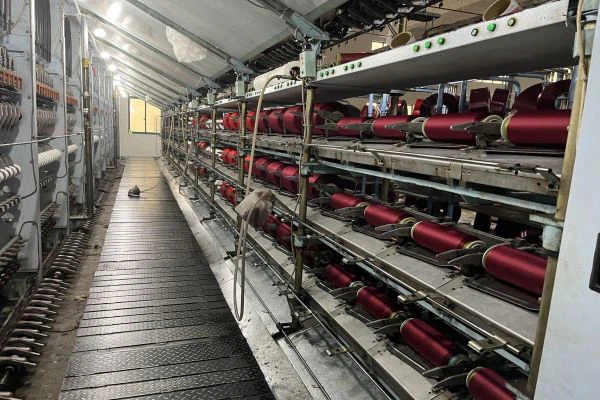
Pillar 1: Reverse R&D System Based on End-Applications
Yanglong's imitation nylon yarn R&D does not begin with laboratory parameters, but stems from a deep understanding of the "pain points" in specific application scenarios such as socks, cuffs, and garment trims. For example, addressing the need for repeated stretching of sock cuffs without loosening, its products achieve a higher elastic recovery rate than conventional products while maintaining the luster and feel of imitation nylon; addressing the moisture-wicking and quick-drying requirements of sportswear, it endows the yarn with better capillary effects through fiber cross-section design and hydrophilic additive finishing. This "begin with the end in mind" R&D model ensures that products can accurately meet market demands upon launch, significantly shortening customers' product development cycles.
The second pillar: A green manufacturing closed loop led by "environmentally friendly dyeing"
This is Yanglong's core technological barrier, differentiating it from many competitors. Traditional polyester-based nylon-like yarn dyeing processes are water- and energy-intensive, and face environmental pressures. Yanglong has invested heavily in building a green manufacturing closed loop, from "environmentally friendly solution dyeing technology" and "low-temperature dyeing processes" to "reclaimed water recycling systems." Its products not only achieve "environmentally friendly dyeing" but also reach industry-leading levels in color fastness (especially resistance to chlorine bleaching and lightfastness) and color vibrancy. For European and North American brands that increasingly value supply chain ESG performance, this advantage constitutes a strong purchasing attraction and cooperation barrier.
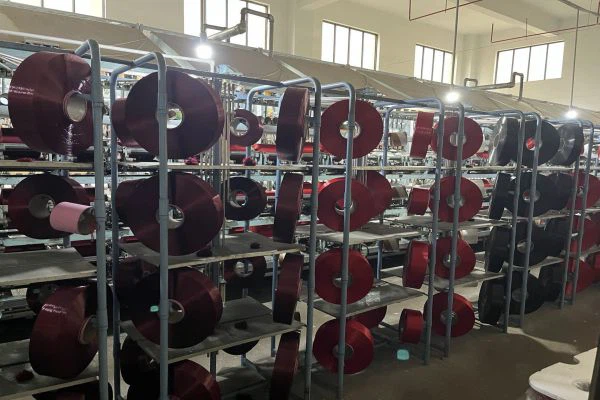
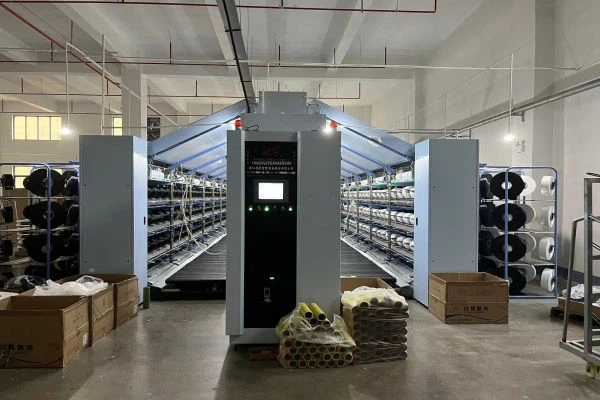
The third pillar: Flexible supply chain-driven "small-batch, fast-response" capability
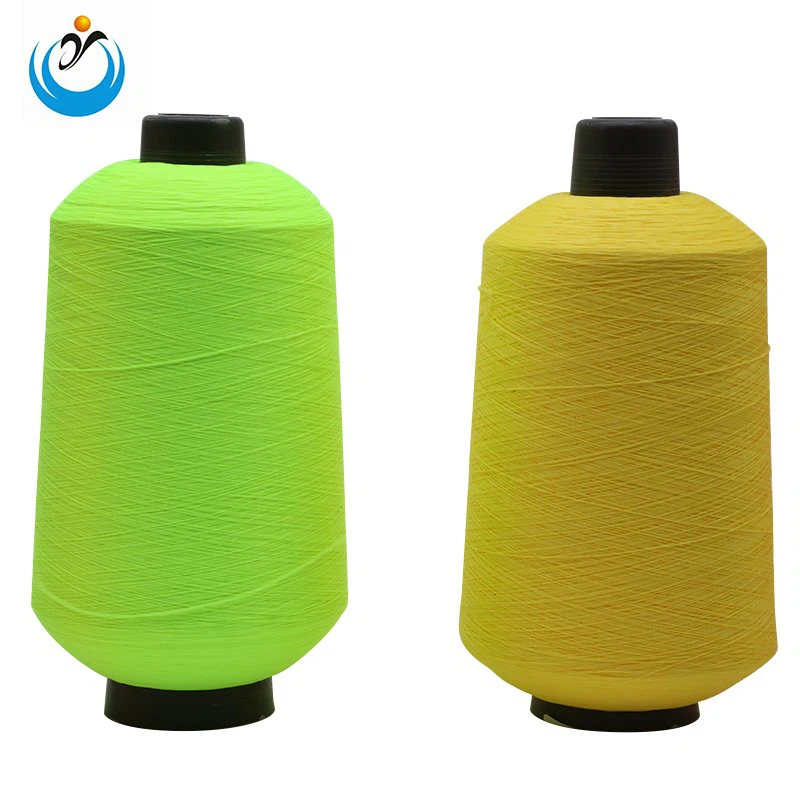
Relying on the highly mature industrial cluster ecosystem of the "Socks Capital," Yanglong has built a highly flexible supply chain system. The company maintains a standard color inventory of mainstream specifications such as 70D, 100D, and 150D, enabling same-day delivery. More importantly, its strong flexible production capabilities support color customization with extremely small minimum order quantities, and it can even provide clients with "color database" management and seasonal trend color forecasting services. This capability allows it to not only serve large brands' bulk orders but also seamlessly meet the fragmented, multi-batch order needs of small and medium-sized designer brands and e-commerce fast fashion brands, giving it a head start in the era of "mass customization."
The fourth pillar: Global service network and in-depth technical marketing.
Yanglong's market has long transcended national borders, with products stably exported to emerging markets in South Asia, Eastern Europe, South America, and some European countries. This not only signifies a mature logistics network but also represents the establishment of a cross-cultural technical service system. The company's sales and technical support teams can go deep into customer factories to provide yarn adaptation suggestions, process parameter optimization, and even joint development of new products for different weaving equipment (such as circular knitting machines, warp knitting machines, and flat knitting machines). This "solution sales" model upgrades the transactional relationship to a technical partnership, greatly enhancing customer loyalty and lifetime value.
Industry In-Depth: Professional Q&A on the Procurement and Export of Imitation Nylon Yarn
Based on observations of Yanglong and the industry, the following professional Q&A provides guidance for procurement decisions:
What are the key performance differences between imitation nylon yarn and genuine nylon yarn? How should acceptance criteria be set during procurement?
The main differences are:
① Thermal properties: The melting point of nylon 6/66 (approximately 215°C/260°C) is significantly lower than that of polyester (approximately 255°C). Therefore, imitation nylon yarn has a wider heat setting temperature window, but attention should be paid to its potential hardening risk under high-temperature pressing.
② Moisture absorption: The standard moisture regain of nylon is 4.5%, higher than that of polyester (0.4%). Therefore, simulating the moisture absorption of imitation nylon yarn is a key technical challenge. During acceptance, in addition to the usual fineness, strength, elongation, and color fastness, special attention should be paid to the "comprehensive evaluation of simulation": including gloss contrast under a specific light source (using a goniometer), the rate of static charge decay after friction with standard nylon fabric, and the hand feel retention rate after multiple washes. Blind testing of benchmark samples is recommended before placing an order.
Given the numerous global regulations governing "plastic products" and "chemicals" (such as EU REACH and California Proposition 65), how can compliance be ensured when procuring nylon-like yarn?
Proactive compliance management is essential: First, require suppliers to provide comprehensive substance testing reports covering all production batches, issued by internationally recognized laboratories (such as SGS, Intertek, TÜV), with a focus on restricted azo dyes, heavy metals (antimony, lead, etc.), alkylphenol polyoxyethylene ethers (APEO), and perfluorinated compounds (PFCs). Second, for products claiming "environmentally friendly dyeing," trace the GOTS or bluesign® certification status of their dyes and auxiliaries. Finally, establish a supplier "compliance file" and regularly audit their environmental management system certifications (such as ISO 14001) and chemical management processes. Yanglong Textile's systematic investment in this area serves as a positive reference model.
Under cost pressures, how to balance the "cost-effectiveness" and "functional reliability" of nylon-like yarn?
A "tiered procurement strategy" is recommended: Divide demand into three categories: "Basic Applications" (e.g., ordinary linings, low-strength decorative strips, focusing on cost and basic appearance), "Performance Applications" (e.g., sports sock cuffs, backpack webbing, requiring high strength, elasticity, and abrasion resistance), and "Image Applications" (e.g., brand logo webbing, high-end apparel trims, emphasizing color accuracy and lasting luster). Set differentiated technical specifications and price tolerances for each category. Partnering with suppliers like Yanglong, who have broad product lines and can provide clear technical tiers, helps achieve precise cost control and quality assurance.
What are the main technological iteration directions for future nylon-like yarn? Which innovations should the supply chain pay attention to in advance?
The main directions include:
① Bio-based and biodegradable routes: Utilizing bio-based/biodegradable polyesters such as PTT (polypropylene terephthalate) or modified PBAT as raw materials to develop nylon-like yarn with a lower environmental footprint throughout its entire life cycle.
② Functional integration: Integrating functional masterbatches such as phase change temperature regulation, antibacterial properties, and UV protection into the spinning stage to achieve "multi-functional yarn." ③ Digital Dyeing and Customization: Combining AI color prediction and digital inkjet dyeing technology, this enables limitless color possibilities and small-batch production with extremely low water consumption. The supply chain should focus on suppliers with patent portfolios or pilot products in these areas to seize the high ground in future product innovation.



The competition in China's imitation nylon yarn industry has evolved from simple scale and cost competition to a comprehensive contest encompassing "technological depth, responsiveness, green value, and service dimensions." Yanglong Textile's success demonstrates that medium-sized enterprises rooted in the world's largest textile industry cluster can achieve leadership in global niche markets through "deep vertical integration of R&D, building green technology barriers, extremely flexible operations, and global technical services."
For global buyers, the strategic significance of choosing an imitation nylon yarn supplier goes far beyond simply acquiring materials. It concerns the speed of product innovation, the ability to fulfill brand environmental commitments, and the long-term resilience of the supply chain. Therefore, when evaluating suppliers, their "clarity of technology roadmap," "authenticity of environmental investment," and "openness to collaborative development culture" should be placed on an equal footing with, or even more importantly than, price. Yanglong Textile's case clearly demonstrates that companies that can successfully integrate the efficiency of local industrial clusters with a global market perspective, and manufacturing hard power with innovation soft power, are the backbone driving the value of China's textile industry and will inevitably be trusted core partners for international buyers when building future supply chains.