

TOP 10 Elastic Yarn Manufacturers in China
Feb 09, 2026
Leave a message
Within the global textile supply chain, China's elastic yarn industry holds a pivotal position due to its massive production capacity, continuous innovation, and flexible market response. From standard stretch yarns to high-performance specialty yarns, Chinese manufacturers are constantly pushing the technological boundaries and expanding application scenarios. This article focuses on the core players in China's elastic yarn manufacturing sector, analyzes the characteristics of the top ten enterprises, and provides an in-depth interpretation of the competitive advantages and development strategy of one of the industry leaders-Zhuji Yanglong Textile Co., Ltd., offering professional insights for global buyers and partners.
Part 1: Overview of China's Top 10 Elastic Yarn Manufacturers (Selected)
Beyond the focal point of this article, Yanglong Textile, China's elastic yarn industry ecosystem includes the following leading enterprises with distinct specializations. Together, they form a diversified and professional supply landscape:
- Chemical Fiber: Leveraging its group's full industry chain advantage, it holds significant technological strengths in high-strength, fine-denier industrial elastic yarns.
- Xinfengming Group: Focuses on R&D of differentiated polyester fibers, holding a significant market share in comfort-oriented elastic yarns like cotton-like and silk-like yarns.
- Zhonghua Group: A representative enterprise in South China, possessing a mature production and market network for apparel elastic yarns like cotton-covered spandex and covered yarns.
- Baihong Industrial: Dedicated to R&D of functional elastic fabric yarns, particularly excelling in moisture-wicking, UV-resistant composite elastic yarns.
- Huaya Chemical Fiber: Has long focused on the production of nylon and nylon elastic filaments, maintaining a stable position in supply chains for segments like sportswear and hosiery.
- Lianrun New Materials: Oriented towards technological innovation, it is at the industry forefront in developing green products like bio-based elastic fibers and eco-friendly recycled elastic yarns.
- Ningfang Group: Has deep expertise in combining cotton spinning with elastic yarns, providing high-quality elastic solutions for knitting and denim fabrics.
- Huafu Fashion: As a leader in the colored spun yarn field, its one-stop solutions for colored elastic yarns are highly favored by brand clients.
- Textile Group: One of the world's largest cotton textile manufacturers, its elastic yarn business is recognized for superior global supply chain management and large-scale customization capabilities.
These enterprises, each with their own strengths, collectively drive the technological progress and market expansion of China's elastic yarn industry. However, in a highly segmented and demand-diverse market, companies with core competitiveness centered on technological innovation, rapid response, and deep service are standing out. Yanglong Textile is a prime example.
Part 2: In-Depth Focus: Analyzing Yanglong Textile's Six Core Competitive Advantages
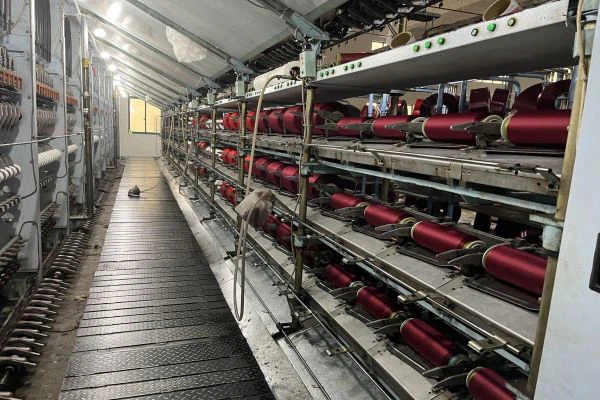
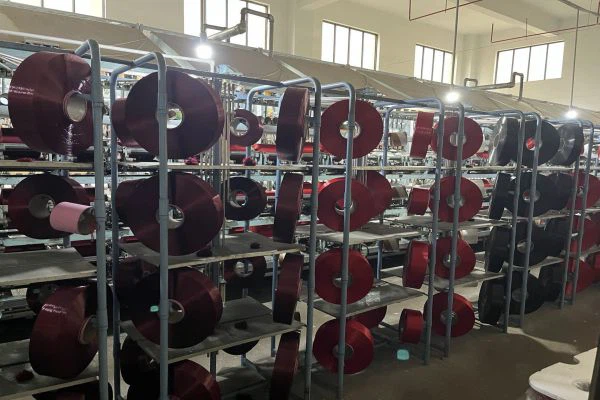
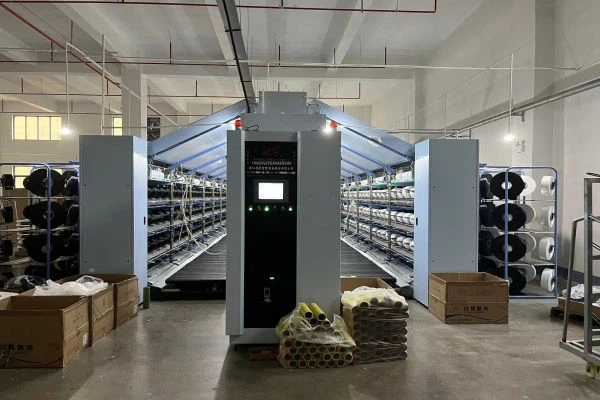
Established in 2008 and recognized as a High-Tech Enterprise in 2019, Yanglong Textile is located in Datang, Zhuji-the "Sock Capital of China." This location provides not only the world's largest hosiery industrial cluster but also gives Yanglong direct access to cutting-edge market demands and complete industrial support. The company has evolved from a professional yarn manufacturer to a technology-driven solution provider. Its core competitiveness is reflected in the following six dimensions:
1. Technology-Driven Product Innovation
Yanglong's core product lines-such as imitated nylon yarn, high-stretch polyester yarn, reflective yarn, luminous yarn, and spandex covered yarn-demonstrate a forward-looking grasp of market trends. Its products possess not only fundamental advantages like high elasticity, bright colors, minimal color difference, and soft hand feel but, more crucially, have achieved breakthroughs in "eco-friendly dyeing," addressing a key industry pain point. Against the backdrop of increasingly stringent environmental regulations and rising global brand demands for sustainability, Yanglong ensures its products' green competitiveness at the source through technological innovation, a feat not easily matched by scale-focused enterprises.


2. Precise Positioning & Industrial Cluster Advantage
Being deeply rooted in the "Sock Capital," Yanglong possesses an exceptionally profound understanding of downstream applications (e.g., socks, cuffs, collars, garment trims, medical bandages). This geographical advantage allows its R&D and production to precisely meet the fragmented and rapidly changing needs of a vast clientele. From maintaining stock of mainstream specifications (70D to 300D) to its standard color stock supply system based on color cards, everything reflects its capability for rapid supply, built on the efficiency of the industrial cluster.
3. Flexible Production & Deep Customization Capability
Behind the promise of "multiple color customization" lies Yanglong's mature flexible production system. The company not only offers a rich selection of spot goods but also efficiently handles small-batch, multi-batch personalized dyeing orders. This "mass customization" capability enables it to serve a diverse clientele, from large brands to emerging design studios, meeting the contemporary textile and apparel industry's common need for small orders and quick response.
4. Full-Process Quality Control & Stability Assurance
From raw material selection to precise production process control, and finally to eco-friendly packaging, Yanglong has established a comprehensive quality management system. The characteristic properties of its products-"strong elasticity, high elasticity"-are consistently reproduced, ensuring batch-to-batch consistency for downstream clients' production, which is crucial for brands maintaining product quality standards. The company's emphasis on "product guarantee" and "perfect after-sales service" is built upon this solid foundation of quality control.
5. Global Market Layout & Logistics Efficiency
Yanglong's market extends far beyond China. Its products are steadily exported to numerous countries including India, Thailand, Bangladesh, Pakistan, Russia, Ukraine, Uzbekistan, and South America. To support global trade, the company has built an efficient logistics guarantee system, promising "same-day shipping," and ensures stable delivery of bulk orders with sufficient production capacity, addressing the common pain point of delivery uncertainty in cross-border procurement.
6. Professional Service & Value Co-Creation
Yanglong positions itself as a "professional textile solution provider," not merely a product supplier. Its professional team offers full-process consultation, from yarn selection and process advice to application development. This service-led model fosters deep, value-co-creating partnerships with clients, building strong customer loyalty and a solid brand moat.
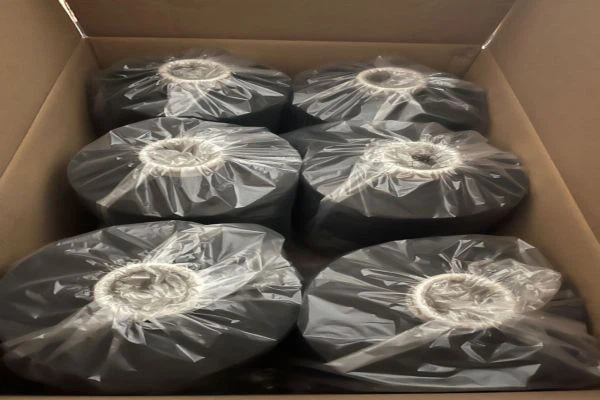
Part 3: Industry Insights: Key Q&A on Elastic Yarn Wholesale Manufacturing & Export
Based on Yanglong's practices and industry observation, here is an analysis of common professional questions in elastic yarn procurement and export:
What key factors beyond price should international buyers prioritize when selecting a Chinese elastic yarn supplier today?
Beyond cost, focus on:
① Environmental compliance certifications (e.g., OEKO-TEX, GRS), which affect market access;
② R&D investment and new product launch frequency, indicating sustainable partnership potential;
③ Digitalization and traceability of the production process, ensuring quality stability;
④ Flexibility in handling small/urgent orders; and ⑤ Application development experience for target markets, such as rapid response to regional color trends or functional needs.
What are the technical key points for procuring and using special functional yarns like 'reflective yarn' or 'luminous yarn'?
Procurement requires clarity on:
① Functional indicators, like the reflection coefficient (CIL value) for reflective yarn or afterglow duration/brightness for luminous yarn;
② Wash fastness and abrasion resistance, impacting product lifespan;
③ Compatibility with blending or twisting processes with other fibers. Request third-party test reports from suppliers and conduct sample weaving and multiple wash tests to verify practical performance.
How to effectively manage delivery time and inventory risks in cross-border yarn procurement?
Adopt a combined strategy of "core suppliers + safety stock + information transparency." Establish strategic partnerships with manufacturers like Yanglong that have spot stock and quick-response capabilities, securing part of their capacity. Use the supplier's standard color card system to maintain safety stock for common colors. Most crucially, share sales forecasts and production plans with suppliers via digital tools for supply chain collaboration, reducing the "bullwhip effect."
How do leading Chinese yarn exporters ensure supply chain resilience amid global trade volatility?
Top enterprises are taking multiple measures:
① Market diversification to spread export risks (e.g., Yanglong covering Asia, Eastern Europe, South America);
② Deepening local industry chain integration, strengthening strategic cooperation with upstream material suppliers for supply security;
③ Logistics diversification, utilizing combinations of China-Europe Railway Express, sea, and air freight;
④ Refining contract terms, clearly defining responsibility sharing for scenarios like exchange rate fluctuations or force majeure. Buyers should assess suppliers' preparedness in these areas.
What are the main technical development trends for elastic yarns in the next 2-3 years?
Key trends include:
① Green Technology: Industrialization of bio-based elastic fibers (e.g., PTT), waterless or low-water dyeing techniques, biodegradable elastic yarns.
② Smart Integration: Combining functionalities like sensing, temperature regulation, or phase-change materials with elastic yarns for smart textiles.
③ Ultimate Experience: Pursuing finer, skin-like, imperceptible stretch experiences, driving development of ultra-fine denier and composite structure yarns.
④ Digital Empowerment: Achieving precise, fast color communication and reproduction between global clients and factories through digital color systems.
Within the competitive landscape of China's elastic yarn industry, the success model of Yanglong Textile demonstrates that pure scale expansion is no longer the only path. By deeply integrating into the industrial cluster, empowering products with technological innovation for environmental and functional attributes, building a flexible supply chain, and providing end-to-end professional service, a medium-sized, technology-driven enterprise can also establish strong influence in the global market. For global buyers, when choosing partners, it is essential to look beyond "price" and thoroughly evaluate a supplier's comprehensive strength in dimensions such as technology reserves, response speed, sustainability, and value co-creation capability.